Does Anise Oil Stain Fabric? How to Lift the Mark
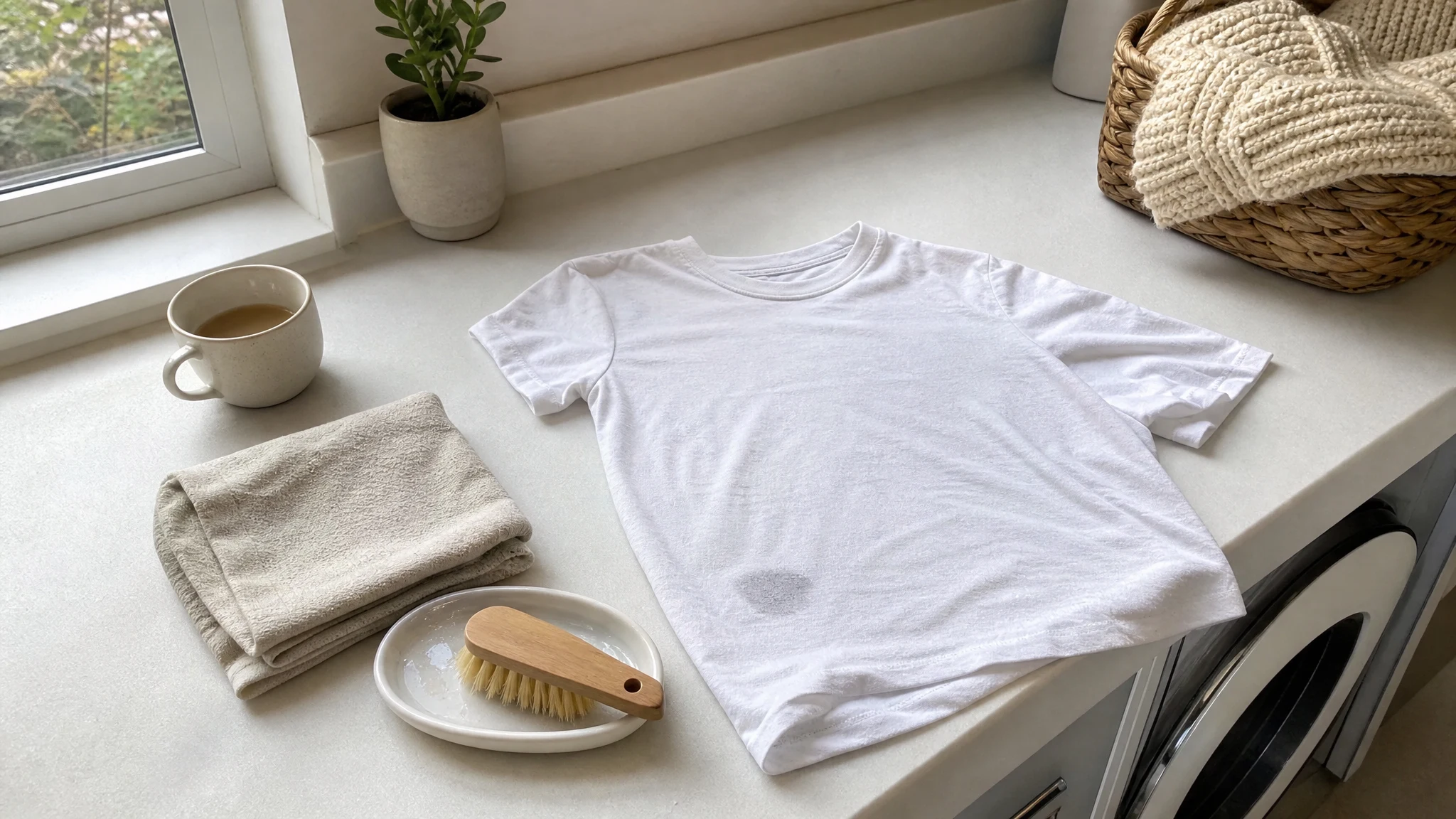
Yes, anise oil can mark fabric. Every essential oil is an oil, and an oil on cotton leaves the same translucent, slightly darker patch a drop of salad dressing does, usually with a ring that spreads as it soaks in. The good news is that a fresh mark on a washable fabric is an ordinary grease stain, and ordinary grease stains have a well-worn routine.
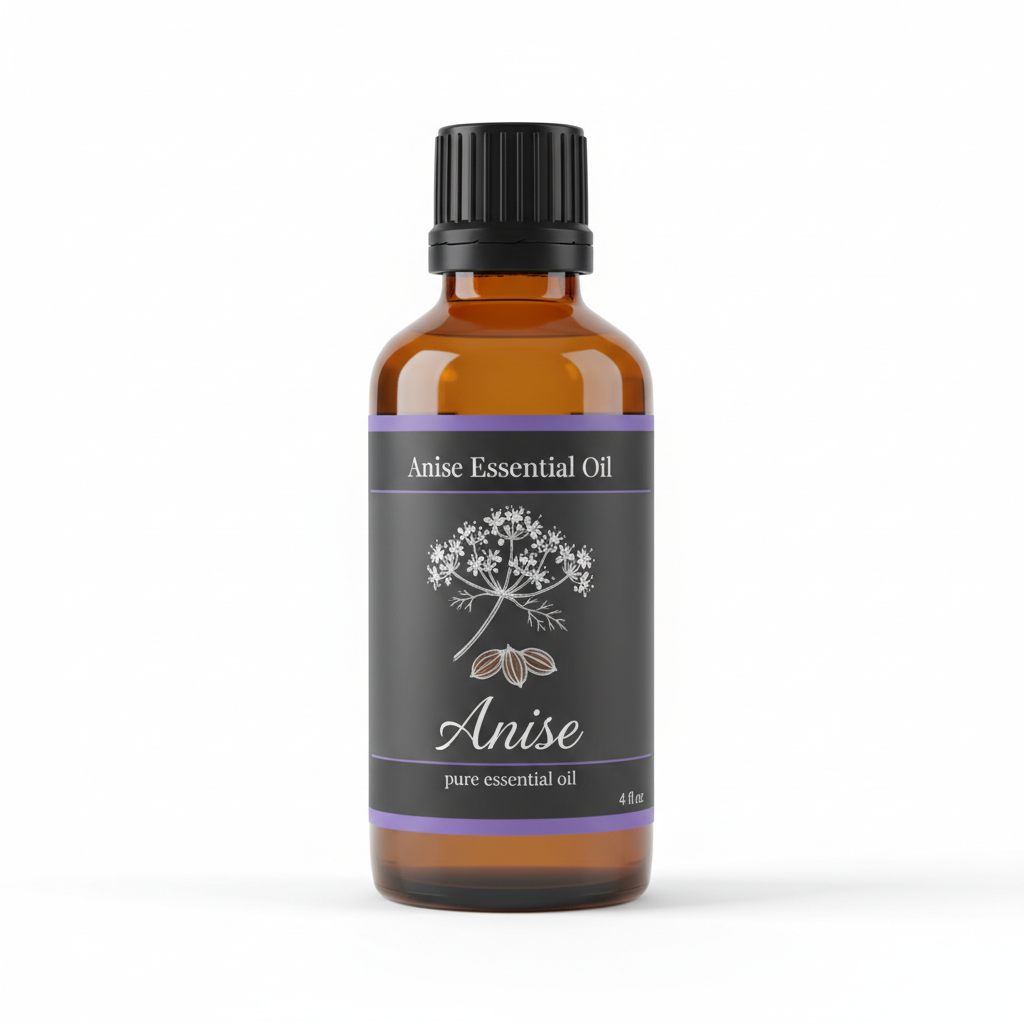
Anise Essential Oil
Our own Anise Essential Oil, in sizes from 0.5 oz to bulk.
From $8.99
Shop Now →Start with the care label
University of Georgia Extension's stain guide for oils opens its cautions with the same advice we would give: read the care label before you try anything, never use a method the label prohibits, and pretest any cleaning agent on a hidden spot to check colourfastness (University of Georgia Extension, "Remove Stains From Oil"). That one rule saves more garments than any clever trick.
The routine for washables
The Georgia guide's oil entries share a rhythm: absorbent material under the stain, a dampened absorbent pad on top that you change as it picks up oil, a flush, and a repeat until nothing more lifts. One entry uses diluted hand dishwashing detergent for the cleaning step. Put together for a fresh anise oil mark on washable cloth, that suggests this:
- Blot, never rub. Press a clean cloth or paper towel on the spot to lift what has not soaked in. Rubbing pushes oil deeper into the weave.
- Put something absorbent under the stain, then work a little liquid dish detergent into the spot with your fingertip. Dish detergent is built to break up grease, which is what this is.
- Let it sit for a few minutes, then flush with water the care label allows.
- Wash as normal, then look at the spot while the garment is still damp. If a shadow remains, repeat before it goes anywhere near a dryer.
That last point matters most. Heat can set an oily mark, so we would air-dry until you are sure it is gone. We are reasoning from the general behaviour of oil on cloth here and from the Georgia method; the guide does not mention anise by name.
A quirk of anise: it can turn crystalline
Most oils stay liquid at room temperature. The main component of anise oil, trans-anethole, melts at about 20 degrees Celsius (Vratsanos et al., 2023), which is right at a cool room's temperature. So a drop on a cold windowsill, a chilly shelf or a tiled counter can set into pale, waxy crystals instead of soaking in. Our piece on why anise oil turns solid or cloudy covers the bottle side of this. For a stain, it means you may be dealing with a little solid first. Scrape it up gently with the edge of a card, then treat what is left as above.
Colour, silk and the garments to hand over
The COA we publish lists the appearance standard for our oil as a colourless to yellow liquid, so we would not expect a vivid dye mark; what you are most likely to see is the oily shadow. A yellowish tint on pale fabric is possible with any slightly coloured oil, so we do not promise there will never be one.
For silk, wool, leather, suede or anything marked dry-clean-only, skip the home routine. Blot gently, keep the spot dry, and take it to a professional cleaner, telling them what the oil was. A cleaner has solvents and equipment a kitchen does not.
Surfaces
- Sealed countertops and tile: wipe up the oil and wash with warm water and a drop of dish detergent.
- Unfinished wood and stone: blot at once, because they absorb. A hard-to-lift mark may need a stone or wood-care professional.
- Painted, varnished or plastic surfaces: wipe quickly and check a hidden corner afterward. We would not assume any finish ignores a concentrated oil, so keep bottles over a tray when you decant.
Preventing the next one
Most spills happen mid-pour. Work over a tray, stand the bottle upright on a folded paper towel, and keep the cap close. Mixing a room or linen spray? Our anise room and linen spray post explains why a light mist and a patch test on a hidden hem are worth the extra minute. Skin products made with the oil can transfer to sheets and sleeves too, so a lightly diluted massage oil belongs on a towel you do not mind marking.
Caught early, blotted and washed, most oil marks give up. The ones that go wrong are usually a rushed rub on something delicate, and those are worth handing to a cleaner.
Anise Essential Oil
Anise Essential Oil from our own shop, in sizes from 0.5 oz to bulk.
From $8.99
Shop Now →Sources & Further Reading
- Remove Stains From Oil, University of Georgia Extension, Textiles
- Ouzo Effect Examined at the Nanoscale via Direct Observation of Droplet Nucleation and Morphology, Vratsanos, Xue, Rosenmann, Zarzar and Gianneschi, ACS Central Science 2023