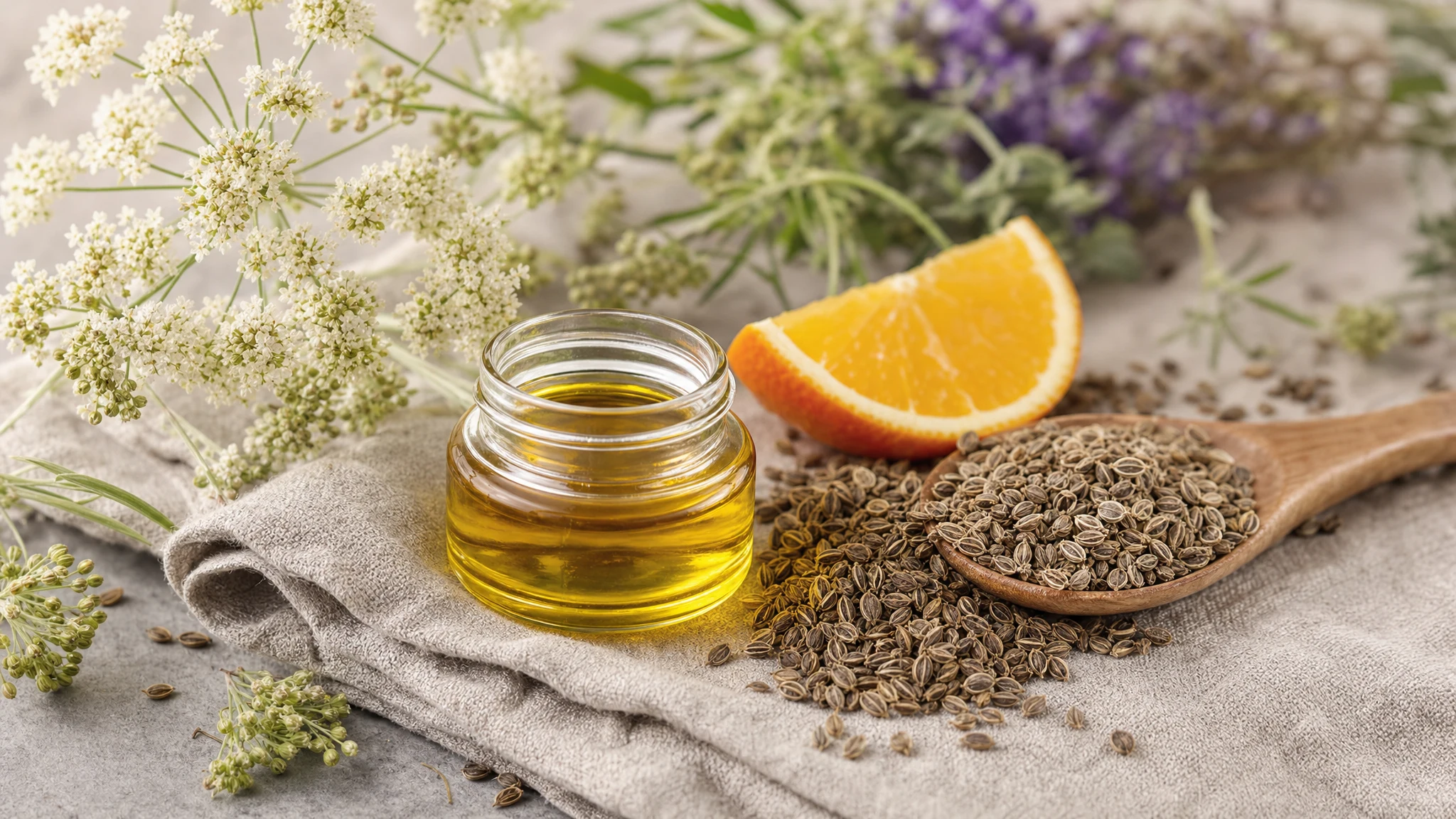
Anise Massage Oil Blends: Dilution Math and Carrier Choices
For an anise massage oil, we recommend 0.5 percent or less: about 3 drops of anise oil in 1 fluid ounce of carrier, using a 20-drops-per-milliliter dropper. Choose a plain carrier such as fractionated coconut or jojoba, patch test for 24 hours first, and skip it entirely if you are pregnant, nursing, or have sensitive or reactive skin.
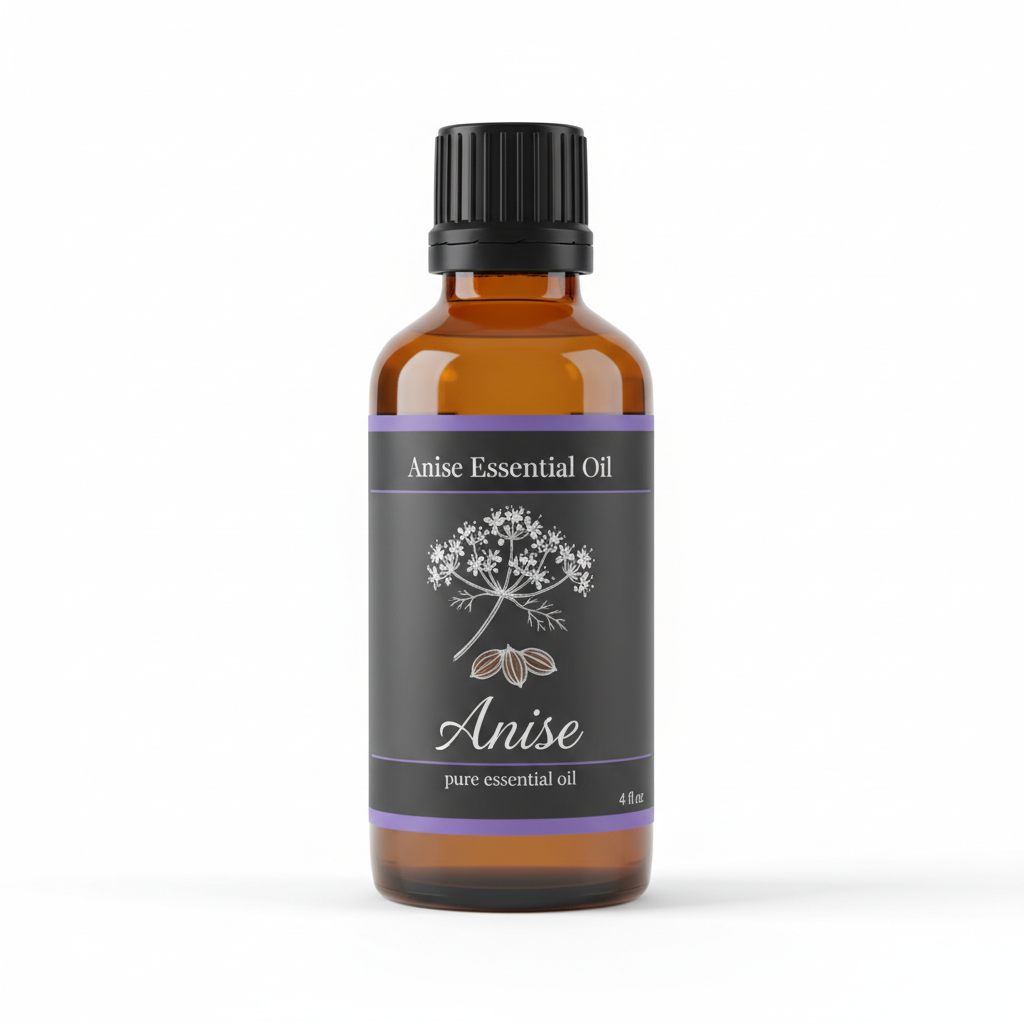
Anise Essential Oil
Our own Anise Essential Oil, in sizes from 0.5 oz to bulk.
From $7.99
Shop Now →The rest of this page shows the arithmetic, explains why we sit at the low end of the range on our safety basics page, and gives scent pairings. It is about scent and skin care for a body oil, not about any health purpose.
Why Anise Gets a Lower Ceiling Than Lavender
Most massage-oil recipes online use a flat 2 percent for every essential oil. Anise does not fit that habit. Its main constituent is trans-anethole, which makes up most of the oil (see the chemistry of anise oil). A 2023 European Food Safety Authority opinion on anise oil as a feed additive concluded it should be considered an irritant to skin and eyes and a dermal and respiratory sensitiser, and noted its estragole content (at or above 1 percent) as a handling concern (EFSA FEEDAP Panel, EFSA Journal 2023). That is an animal-feed assessment, not a cosmetic limit, but it tells us what kind of material this is.
A massage is also a worse case than a dab on the wrist. The oil goes over a large area, in repeated sessions, often under warm hands and sometimes under clothing. Sensitisation risk follows cumulative exposure, which is why we would rather you under-dilute than over-dilute.
What the published maximum is, and what we could not verify
Tisserand and Young's Essential Oil Safety is the standard reference for maximum dermal levels, and the IFRA Standards set limits for fragrance materials including anethole. We could not open either primary source for this article. Secondary retailer listings attribute different maximum figures to the book, and we could not tell whether those figures apply to aniseed or star anise, so we are not quoting one. Our reasoning instead: the site's own guidance gives 0.5 to 1 percent for general adult skin use, and 0.25 to 0.5 percent for the face. For massage we stop at 0.5 percent, and we suggest checking the current Tisserand and Young text or asking a certified aromatherapist if you want to go higher.
The Dilution Math
A dilution percentage is the share of the finished blend that is essential oil. The formula for drops:
Drops of essential oil = (percentage / 100) x (milliliters of carrier) x (drops per milliliter)
One U.S. fluid ounce is 29.57 mL. The drops-per-milliliter figure is the weak link. The Tisserand Institute measured the average weight of 20 drops of essential oil at 0.66 g in each of three studies, and notes that drops per milliliter vary from about 20 to 40 depending on the bottle, the oil, and the angle of the dropper. Its own dilution chart assumes 30 drops per milliliter (Tisserand Institute: How big is a drop?). A common shorthand of 20 drops per mL, or about 600 drops per fluid ounce (20 x 29.57 is 591), sits at the larger-drop end of that range.
We use 20 drops per mL on purpose. Larger drops mean fewer drops to reach a given percentage. If you count drops from a dropper that really delivers 30 per mL, the 20-per-mL count gives you slightly less than the target percentage, which errs on the safe side. The reverse mistake, using a 30-per-mL count with a bottle that delivers 20, would overshoot by half.
| Dilution | 1 fl oz (30 mL) carrier | 2 fl oz (59 mL) carrier | 4 fl oz (118 mL) carrier | Our view for massage |
|---|---|---|---|---|
| 0.25% | about 1.5 drops | about 3 drops | about 6 drops | Start here for the neck, chest or any sensitive skin |
| 0.5% | about 3 drops | about 6 drops | about 12 drops | Our ceiling for body massage |
| 1% | about 6 drops | about 12 drops | about 24 drops | Top of the site's general range; we do not suggest it for massage |
All values assume 20 drops per mL. If you measure a drop count of 30 per mL for your bottle, multiply the table by 1.5; if you do not know, use the table as written. Whatever the count, count the total drops of all essential oils together, not each oil separately.
Small batches are the weak spot
At 0.25 percent in 1 ounce, the recipe asks for one and a half drops, which no one can measure. Make 2 or 4 ounces at a time instead, label the bottle with the percentage and the date, and finish it within a few weeks. Our guide to storage and shelf life covers keeping the oil itself fresh.
Carrier Choices
The carrier sets the feel of the massage and the shelf life of the blend. The three we would reach for:
| Carrier | Feel | Watch for |
|---|---|---|
| Fractionated coconut oil | Light, stays liquid, little scent of its own | Not a sensible pick if you are unsure about coconut sensitivity; patch test the finished blend |
| Jojoba | Slightly richer glide, almost no scent. It is the carrier in our anise solid perfume recipe | Cost per ounce is higher than the others |
| Sweet almond oil | Soft, slightly sweet, a classic massage base | Derived from a tree nut: avoid if you or the person receiving the massage has a nut allergy |
Whatever you choose, buy a carrier meant for skin, keep it in a cool dark place, and note that rancid carrier oil smells flat or crayon-like and should be thrown out.
Scent Pairings, With the Math Applied to the Whole Blend
The product page for our Anise Essential Oil lists orange, clove, cinnamon, vanilla and bergamot as oils that blend well with it. We would use anise as the aromatic accent, not the lead: a sweet, warm licorice note carries a long way. The rule that matters is that your dilution applies to the total of every essential oil in the bottle.
| Scent idea | Rough balance | Total at 0.5% in 1 fl oz |
|---|---|---|
| Anise and sweet orange | 1 part anise, 2 parts orange | About 3 drops total: 1 anise, 2 orange |
| Anise and vanilla | 1 part anise, 2 parts vanilla CO2 extract or oleoresin sold for skin products | About 3 drops total, and check the supplier's usage rate for the vanilla |
| Anise with clove or cinnamon | Mostly anise or orange, only a trace of spice oil | Count every drop toward the 3 total, and do not exceed that spice oil's own maximum |
We deliberately do not give drop counts for clove or cinnamon. We did not verify their dermal maximums for this article, and both are strong spice oils, so the total of 3 drops has to stay under whichever oil has the lowest limit. If you are scenting a diffuser instead, our diffuser blends sidestep skin entirely.
Patch Test Before the First Full Massage
- Mix the exact blend you plan to use, at the dilution you plan to use, in the carrier you plan to use.
- Apply a small amount to the inner forearm or the crook of the elbow.
- Cover loosely with a bandage and leave it for 24 hours without washing the spot.
- Remove it and look. Redness, itching, swelling or a rash means stop and talk to a healthcare provider.
- If the skin is clear, use the blend on a small area for the first session before moving to a large area.
These steps follow the patch-test routine on our safety basics page. A clear patch lowers the odds of a reaction but does not guarantee one will not happen later. Keep the oil away from eyes, the face, broken skin, genitals and other mucous membranes, and wash your hands after mixing.
Who Should Not Use This
- Pregnant or breastfeeding people: skip it and read our pregnancy and breastfeeding page, then ask your OB-GYN or midwife.
- Children: do not use anise massage oil on them. See our children's safety guide and ask a pediatrician.
- Anyone with a hormone-sensitive condition or on hormonal medication: ask your clinician or pharmacist first; see who should ask first.
- Sensitive, reactive or broken skin: choose an unscented carrier instead.
- Anyone with a known sensitivity to anethole or related plants: skip it.
- Pet owners: keep the oil and freshly oiled skin away from animals; the safety page covers pet cautions.
Massaging Someone Else
If you are blending for clients, family members or customers, leave the decision to a licensed massage therapist or a trained aromatherapist, who will take a health history, ask about allergies and pregnancy, and carry their own training and liability coverage. A friend asking for "a little anise" is not an intake form. For gifts and sales, cosmetic labeling and claims are a separate area, so ask a cosmetic regulatory professional before you sell anything.
Frequently Asked Questions
How many drops of anise oil go in a massage oil?
About 3 drops per fluid ounce of carrier gives 0.5 percent at 20 drops per mL. Use about 1.5 for 0.25 percent. Count every essential oil in the bottle toward that total.
Can I use anise oil on the skin undiluted?
No. Anise oil is mostly anethole and is considered a skin sensitiser, and the Tisserand Institute's guidance is blunt: do not apply undiluted essential oils to your skin (safety guidelines). Dilute in a carrier and patch test first.
Is anise oil topical use safe for everyone?
No. Pregnant or nursing people, children, people with hormone-sensitive conditions and people with sensitive skin should not use it without professional advice.
Which carrier oil is best for anise?
Fractionated coconut and jojoba have little scent of their own, so the anise stays in front. Avoid sweet almond if a nut allergy is a possibility.
Can I make a warming massage blend with cinnamon and clove?
You can pair their scents with anise, but those oils carry their own skin cautions. The total essential oil in the bottle must stay within the lowest limit of any oil in it, so check each one first.
How long does a diluted blend last?
Mix small batches and label the date. The carrier is usually the first thing to go off, so smell it before each use and discard it if it smells flat or sharp.
Anise Essential Oil
Anise Essential Oil from our own shop, in sizes from 0.5 oz to bulk.
From $7.99
Shop Now →Sources & Further Reading
- Tisserand Institute: How big is a drop?
- EFSA FEEDAP Panel. Safety and efficacy of feed additives obtained from the fruit of Pimpinella anisum L. EFSA Journal 2023;21(4):e07976
- Tisserand Institute: Safety guidelines (dilution and undiluted-use advice)
- Anise oil safety basics: dilution, patch testing and pets