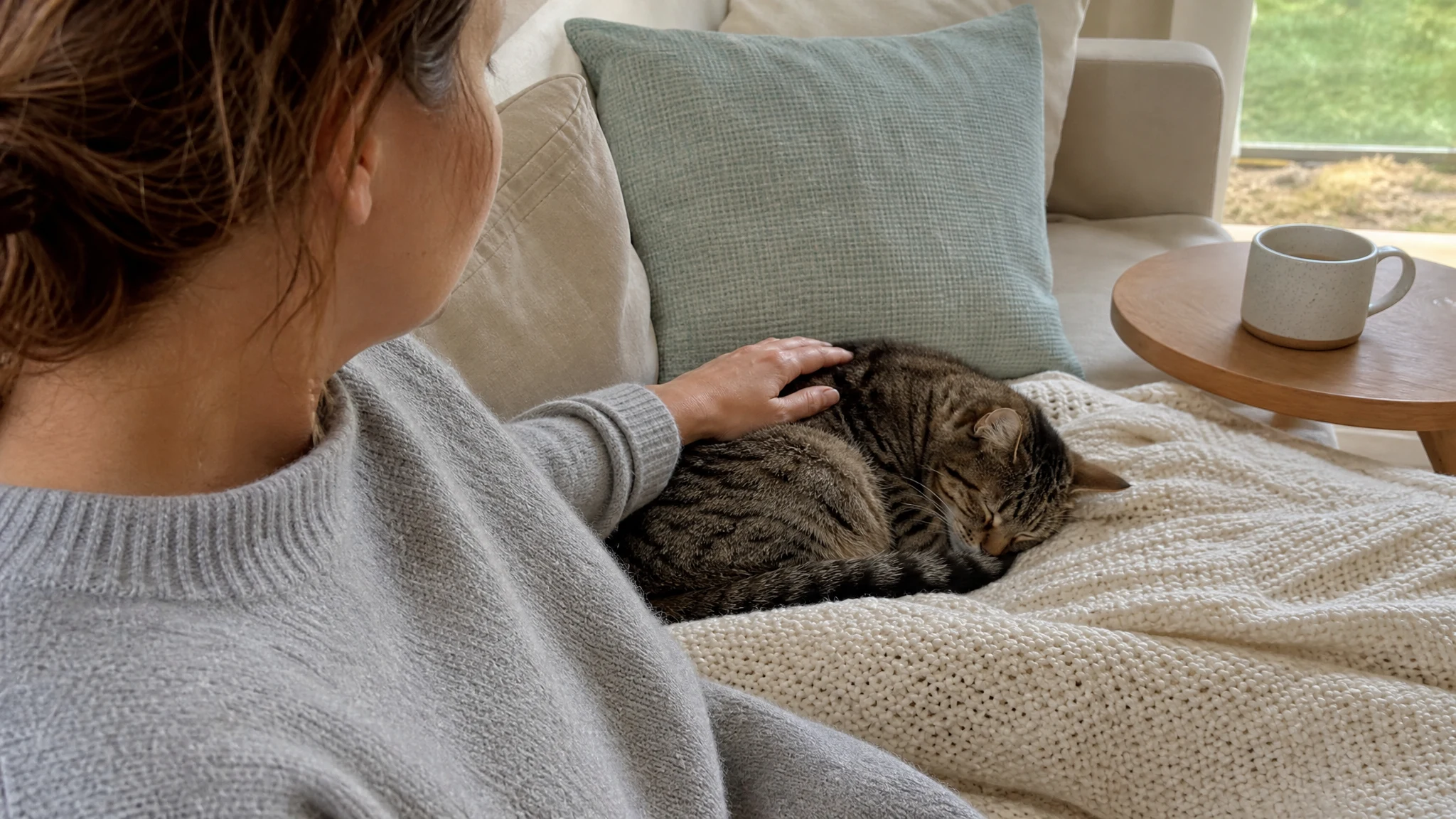
Anise Oil Around Cats and Dogs: What Vets Say
A sweet licorice smell drifting through the house is lovely to us, and it is a very different experience for the cat on the sofa arm. Cats and dogs live close to the floor, groom themselves with their tongues and breathe a lot of the same air we do, which is why a bottle of anise oil deserves a little forethought in a home with animals. We sell an external aroma and cosmetic oil, not a remedy, and the useful question here is less "is it okay?" than "how do I keep it away from them?"
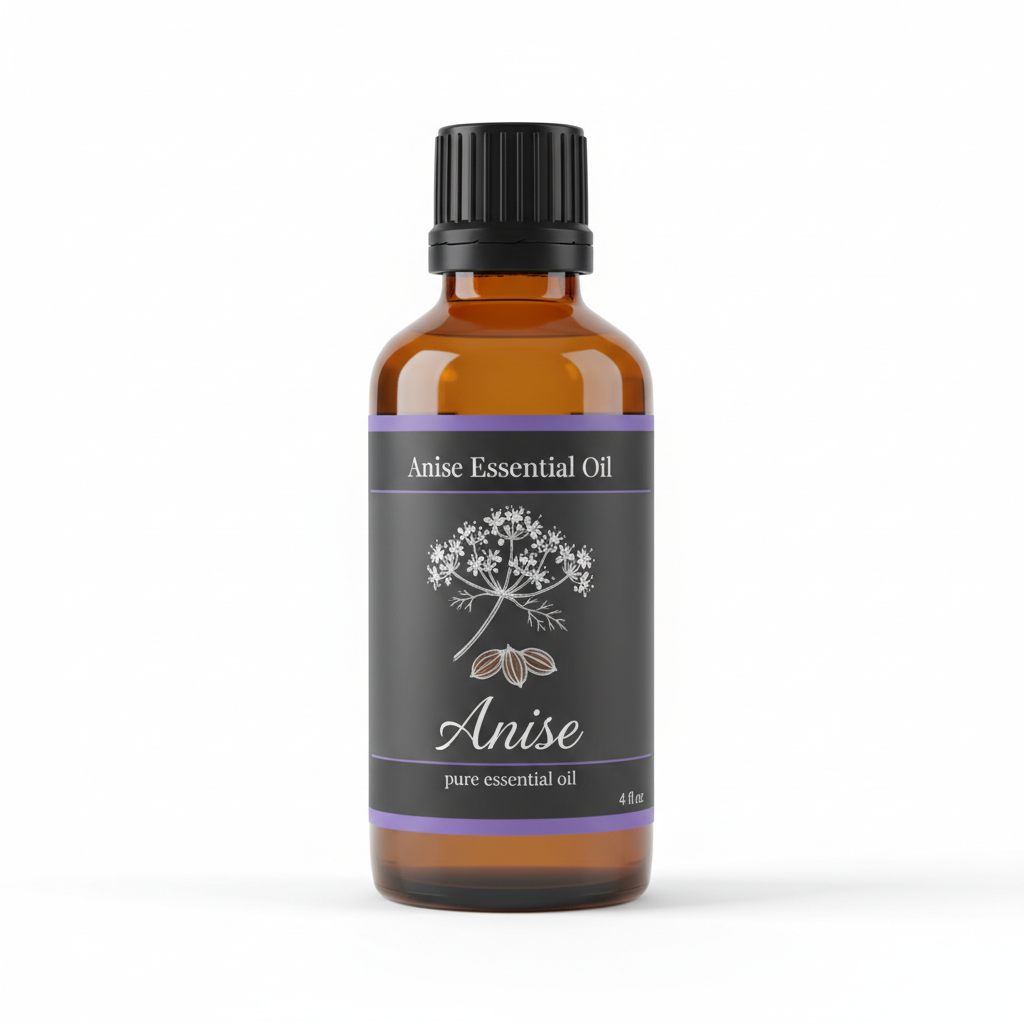
Anise Essential Oil
Our own Anise Essential Oil, in sizes from 0.5 oz to bulk.
From $8.99
Shop Now →What the veterinary sources actually say
Pet Poison Helpline, an animal poison control service staffed by veterinarians, puts it plainly: essential oil poisoning can affect all species, but cats and birds are at the greatest risk. It also ranks the routes. Swallowing is the highest-risk route, then skin contact, then breathing the vapour, and it notes that the real world often mixes all three, for instance when an animal brushes against a spill and then licks its coat (Pet Poison Helpline, "Essential Oils").
Concentration matters as much as the oil. The same service says the higher the concentration, the greater the risk to a cat, and that a 100 percent oil is the worst case. Our anise oil is sold neat and undiluted, so the bottle itself sits at that end of the scale. A diluted product in a carrier oil is a different thing from the bottle, which is one reason we keep the two apart on the shelf.
Why cats get the most attention
Cats are not small dogs when it comes to the liver. A 2014 study comparing cat and dog liver tissue found extremely low formation of several glucuronide products in cats, in line with earlier findings that a key gene is non-functional in the species, while dog liver made much more of them (van Beusekom et al., 2014). Glucuronidation is one of the ways a body clears many foreign compounds, so a cat that licks a concentrated oil off its fur has fewer ways to get rid of it. That is a general species difference, not a statement about anise in particular, and it is the reason cat households get the most careful advice.
Diffusers deserve their own paragraph. A Texas A&M veterinary professor points out that diffused oils are widely distributed through a room, that aerosolising diffusers release micro-droplets that can collect on fur and be swallowed during grooming, and that inhaling them can irritate the airways (Texas A&M VMBS Pet Talk). Signs to know: a watery nose or eyes, drooling, vomiting, and laboured or fast breathing, which in a cat can look like a hairball cough. If you see them, get the animal into fresh air, and if it does not settle quickly, call a veterinarian.
A missing name is not a clearance
Here is a detail worth sitting with. Anise does not appear in the lists of problem oils that Pet Poison Helpline and Texas A&M publish. It would be tempting to read that as good news. We read it as a gap in the lists, which are examples and not exhaustive catalogues, and we would not build a plan around it. What we do know about anise oil comes from a different direction: European regulators reviewing it described it as an irritant to skin and eyes and as a sensitiser (EFSA FEEDAP Panel, 2023). That does not tell you what a cat or a bird would do with it, and neither do we. So we do not call it safe for any animal, and we ask you to put the question to your own veterinarian.
A calm household routine
- Keep the bottle capped and in a closed cupboard, as high as your pets can reach and then some. Our page on storing anise oil around children works just as well for animals.
- Never put the oil on an animal, and do not add it to their bedding, collars or bowls.
- If you diffuse, choose a room the animals can leave, keep the door open, run short sessions and skip nebulising or ultrasonic units where a cat or bird is nearby. Birds are among the most at-risk animals, so we would leave a bird's room unscented.
- Wipe spills straight away; a pet walking through a drop will carry it onto its coat.
- Skin products you make at home count too. A recently oiled arm is not something a dog should lick.
If an animal is exposed
Call a veterinarian or an animal poison line right away, before signs appear; Pet Poison Helpline says signs usually develop within 6 to 8 hours for most oils, but waiting is not a plan. The numbers published by Texas A&M are Pet Poison Helpline at (855) 764-7661 and the ASPCA Animal Poison Control Center at (888) 426-4435. Bring the bottle so the caller can read the name and concentration. Pet Poison Helpline lists bathing with liquid dish detergent for skin exposure, but let the professional on the phone tell you whether to do that, because the right move depends on the animal and the amount.
Our general safety notes are in Anise Oil Safety: Dilution, Skin and Pets, and if you are choosing between a cozy room scent and a pet's comfort, our holiday diffuser piece covers how to think about who is home. For a household with a cat or a bird, the kindest scent plan is often the simplest: let the animals have a room with nothing in the air.
Anise Essential Oil
Anise Essential Oil from our own shop, in sizes from 0.5 oz to bulk.
From $8.99
Shop Now →Sources & Further Reading
- Essential Oils, Pet Poison Helpline
- Essential Oils and Cats, Pet Poison Helpline
- A Scent-sitive Subject: Essential Oil Diffusers and Your Cat, Texas A&M College of Veterinary Medicine & Biomedical Sciences, 14 November 2019
- Comparing the glucuronidation capacity of the feline liver with substrate-specific glucuronidation in dogs, van Beusekom, Fink-Gremmels and Schrickx, Journal of Veterinary Pharmacology and Therapeutics, 2014
- Safety and efficacy of feed additives obtained from the fruit of Pimpinella anisum L.: anise oil for use in poultry and horses and anise tincture for use in poultry, dogs, cats and horses (FEFANA asbl), EFSA Journal 2023;21(4):e07976